How to Build a Diy Outdoor Movie Theater for Under $75 Tonight
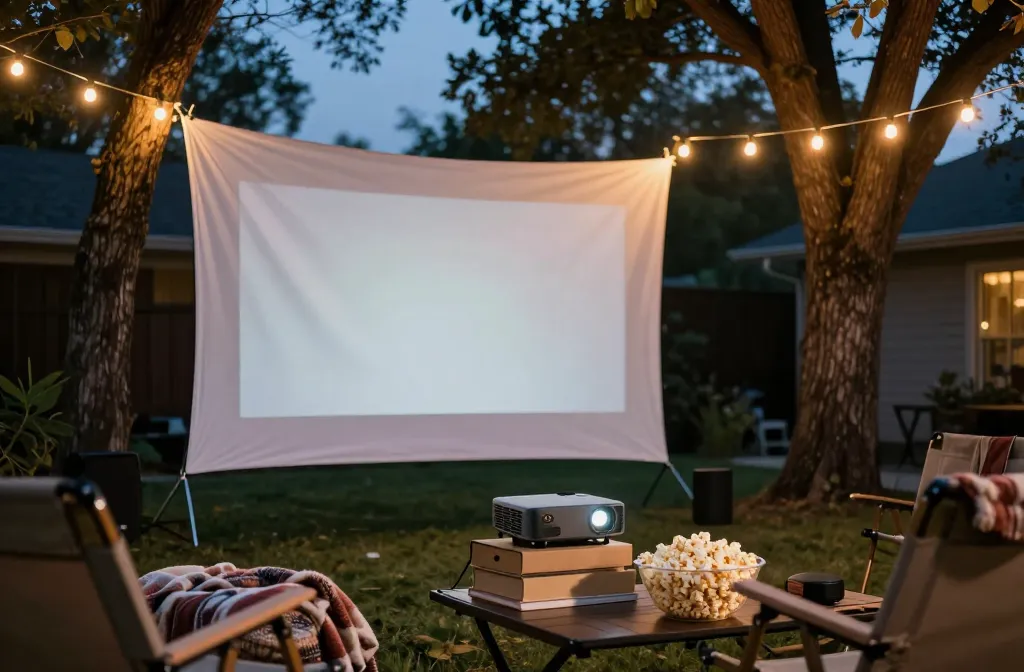
Ready to turn your backyard into a mini cinema without torching your savings? You can set up a surprisingly awesome outdoor theater for less than a dinner out. We’ll keep it simple, cheap, and fun—no power tools degree required. Grab a blanket, call your friends, and let’s make movie night happen.
What You Actually Need (And What You Don’t)
Forget the Pinterest rabbit hole. You only need a few essentials to get a crisp picture and comfy vibes. Here’s the bare-bones kit that stays under $75—assuming you already own a phone or laptop to play the movie.
Tired of snacking when you’re not even hungry? This reset helps you stop the loop and feel back in control.
A simple reset for moments when cravings take over. Easy to use, easy to repeat, and designed to help you feel satisfied instead of stuck.
- Projector (budget-friendly): Look for a mini LED projector in the $45–$60 range. It won’t be IMAX, but it’ll be bright enough after sunset.
- Screen: A white bedsheet you already own, or a $10–$15 vinyl shower curtain liner. Bonus: wrinkle-resistant and weatherproof.
- Sound: A Bluetooth speaker you already have. If not, grab a $10–$20 wired mini speaker. Loudness beats audiophile quality here.
- Cables/Adapters: HDMI cable ($7–$10) and, if needed, a cheap phone-to-HDMI adapter. Many laptops already have HDMI—use what you’ve got.
- Mounting stuff: Clothespins, string, or command hooks you probably own. Worst case, $5 at the store.
Pro tip: Skip the tripod. A stack of books or a shoebox with a cutout works as a projector stand. It’s DIY movie night, not a camera crew.
Budget Breakdown (Keep It Under $75)
Prices wiggle by brand and sales, but here’s a realistic mix:
- Mini LED projector: $50 (search “1080p support, 720p native,” LED, 60–100 ANSI lumens)
- Screen solution: $0–$15 (bedsheet or shower curtain liner + clips)
- HDMI cable: $8
- Audio: $0 if you own a Bluetooth speaker; otherwise $12–$20 for a small wired speaker
Total: $58–$93. To land under $75, borrow a speaker and use a bedsheet. IMO, that’s the easiest win.
Set Up The Screen (Your Backyard’s New Big Wall)
You need a flat, bright surface. No screen? No problem. We’re going crafty.
Transform Your Home With 7,250+ Stunning Landscaping Designs—No Expensive Designers Needed!
- 🌿 Access 7,250+ stunning landscaping designs.
- 💰 Save thousands—no pro designer needed.
- 🏡 Plans for gardens, patios, walkways, and more.
- ✨ Simple, beginner-friendly DIY layouts.
- 🛠️ Customize any design to fit your yard.
Option A: The Bedsheet Hack
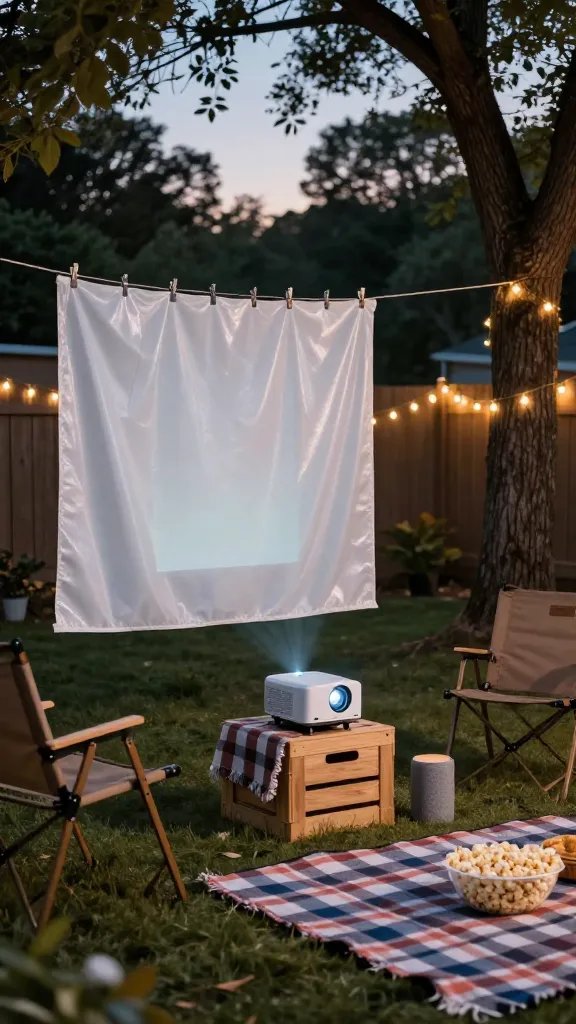
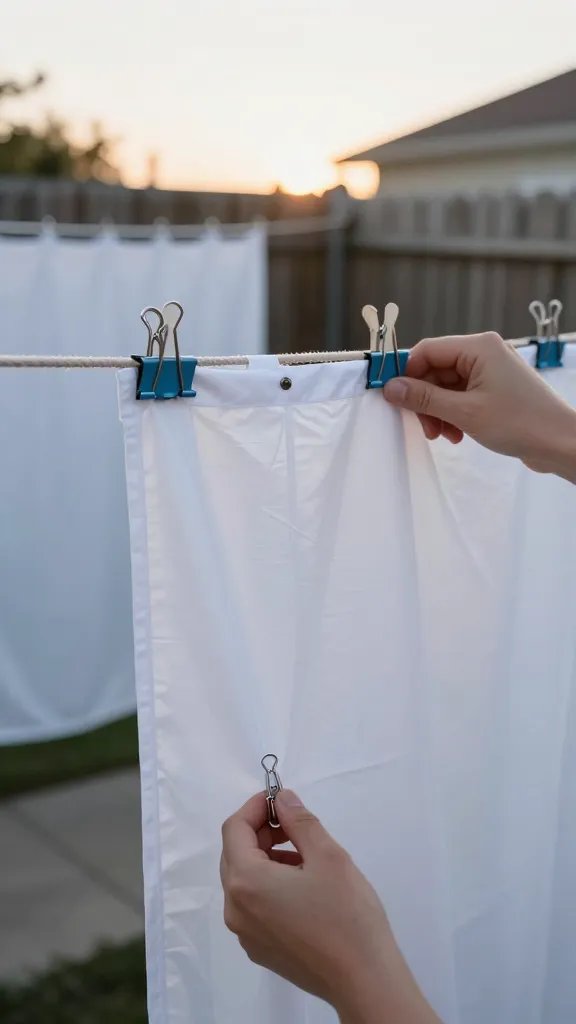
- Pick a white, matte sheet (no patterns). Thicker fabric blocks background shadows.
- Stretch it tight across a fence, garage door, or between two trees.
- Use clothespins, binder clips, or tape to eliminate wrinkles. Wrinkles = weird waves on faces.
Option B: The Shower Curtain Liner Upgrade
- Get a white matte vinyl liner (~$10–$15). It handles moisture and wind better.
- Hang via grommets on string or zip ties; tension both sides for a clean, flat look.
- If it’s see-through, add a light-colored sheet behind it. Instant glow-up.
Ideal size: Aim for a 60–80 inch diagonal. Bigger screens need more brightness. Your mini projector will thank you.
Dial In The Projector (So The Picture Actually Slaps)
Your budget projector can look great with some quick tweaks. The goal: clear, bright, and centered.
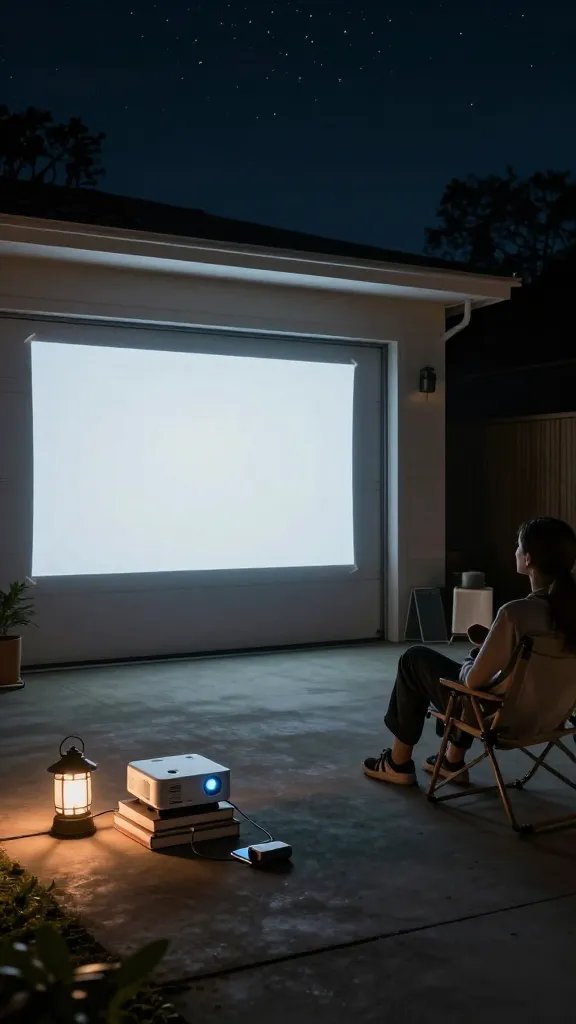
- Placement: Start 7–10 feet from the screen. Move closer for a brighter, smaller image.
- Height: Prop the projector so it points straight at the center. Use books to angle it. Keep it level to avoid trapezoid edges.
- Focus & keystone: Twist the focus ring until text looks sharp. Use keystone sparingly—physical alignment beats digital correction.
- Brightness/contrast: Bump contrast up a bit. Lower color temperature if skin tones look neon. Do this on the projector’s menu, not your device.
- Timing: Start at dusk or later. These projectors crush it in darkness, not daylight. FYI: String lights look cute, but they wash out the screen—keep them dim.
Sound That Doesn’t Sound Like A Tin Can
Visuals wow people, but sound sells it. You’ve got options.
Best Free Option
- Use a Bluetooth speaker you already own. Put it under the screen, aimed at the audience.
- Sync ahead of time. Some projectors or phones add Bluetooth delay—test and adjust lip sync if available.
Budget Wired Option
- Plug a mini speaker into your laptop’s headphone jack for zero lag.
- Place the speaker at the front. Centered audio feels louder at lower volume.
Volume tip: Think “conversation with popcorn,” not “call the neighbors.” If you need more punch, angle the speaker upward slightly or place it near a wall to reflect sound.

Play Your Movies (Without Tech Headaches)
Pick the simplest source you own. Don’t reinvent the HDMI wheel.
- Laptop + HDMI: Most reliable. Set display to “duplicate.” Turn off notifications because no one needs your Slack pings at Mordor.
- Streaming stick: If your projector has HDMI and USB power, plug in a stick you already own. Connect to Wi‑Fi before heading outside.
- Phone/tablet: Use a cheap HDMI adapter (Lightning/USB‑C to HDMI). Charge fully first.
Connectivity Checklist
- Test audio and video indoors first. Save yourself the 9 p.m. cable scramble.
- Download films offline if your Wi‑Fi dies in the yard.
- Bring an extension cord and a power strip. You’ll always need one more outlet. Always.
Aspect ratio tip: Most budget projectors like 16:9. Set your video to match so you don’t get letterbox bars eating your screen.
Seating, Snacks, And Vibes (On The Cheap)
You don’t need matching Adirondacks. Comfort > aesthetics, every time.
- Seating: Layer blankets and pillows up front, camp chairs in the back. Clear sightlines matter.
- Bug defense: Citronella candles help a bit; bug spray works a lot. Feed the guests, not the mosquitoes.
- Lighting: Keep it dim. One path light or a soft lantern lets people find snacks without bleaching the screen.
- Snacks: Popcorn in brown paper lunch bags = instant theater feel. Add a DIY seasoning bar: cinnamon sugar, ranch powder, chili-lime.
Weather And Wind Insurance
- Use two extra clips on the bottom of the screen to stop flapping.
- Have a towel or microfiber ready for dew. Protect the projector with an overhang or a cardboard “roof.”
- Check the forecast. If wind howls, move closer and shrink the screen for better brightness.
Quick Troubleshooting (Because Tech Likes Drama)
- Image looks dim: Move the projector closer. Shrink the screen. Wait till it’s fully dark.
- Picture looks fuzzy: Tighten the sheet, refocus, and clean the lens. Yes, with a soft cloth—no shirt corners, please.
- Audio lag on Bluetooth: Switch to a wired connection, or use a device with audio delay settings to resync.
- No signal: Check the projector’s input source. Try another HDMI port or cable. Power-cycle both devices.
- Colors look off: Lower saturation and color temperature. Skin tones should look warm, not radioactive.
FAQ
Can I really do this for under $75 without it looking janky?
Yes. Keep costs down by borrowing a speaker, using a sheet, and buying a decent entry-level projector. The magic comes from darkness, a flat screen, and correct focus. Nail those, and it feels way fancier than the price tag.
Do I need a special “high-lumen” projector?
For outdoors, more lumens help, but you don’t need a monster. A budget mini projector with around 60–150 ANSI lumens works fine after sunset on a 60–80 inch screen. Start at dusk, not daylight. IMO, placement beats raw brightness here.
How do I avoid annoying the neighbors?
Wrap it by a reasonable hour, keep volume moderate, and aim the screen away from their windows. A simple heads-up text works wonders. Also, bass carries—keep the speaker closer to your group and off shared fences.
What if my Wi‑Fi is weak outside?
Download your movie to your laptop or streaming stick beforehand. Or run an Ethernet cable if your device supports it. Worst case, hotspot from your phone for quick logins, then play the local file.
Can I use a white wall instead of a sheet?
Absolutely. A smooth, matte white wall makes a great screen. If it’s glossy or textured, you’ll see reflections or shadows—hang the liner or sheet to fix that.
Is there a cheap way to boost sound quality?
Place the speaker on a small box or tray and angle it up. Put it near a wall to reflect sound toward the audience. For a $0 hack, set the speaker inside a shallow bowl to focus audio forward. It’s goofy and effective, FYI.
Conclusion
You don’t need pro gear to throw a killer backyard movie night—just a basic projector, a tight screen, and smart placement. Keep the screen small, the lights low, and the snacks plentiful. Do a five-minute test run before guests arrive, and you’ll look like a genius. Now hit play and enjoy the show—credits roll, budget intact.